Episode 3 — All Eyes on Makola
- August 23, 2026
- Posted by: Public Affairs Officer
- Category: News
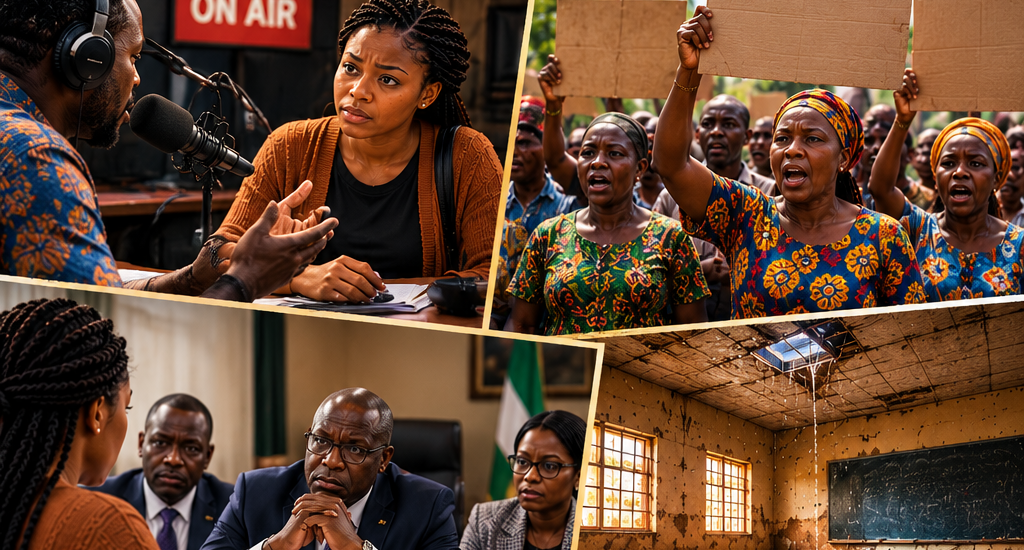
By Monday morning, Makola was no longer talking about the rain. It was talking about the money.
At the market, traders discussed the letter between customers. At the barbershop, men argued over who should be held responsible. Parents who had never attended a school meeting were suddenly asking questions about budgets, repairs, and the promises made to their children.
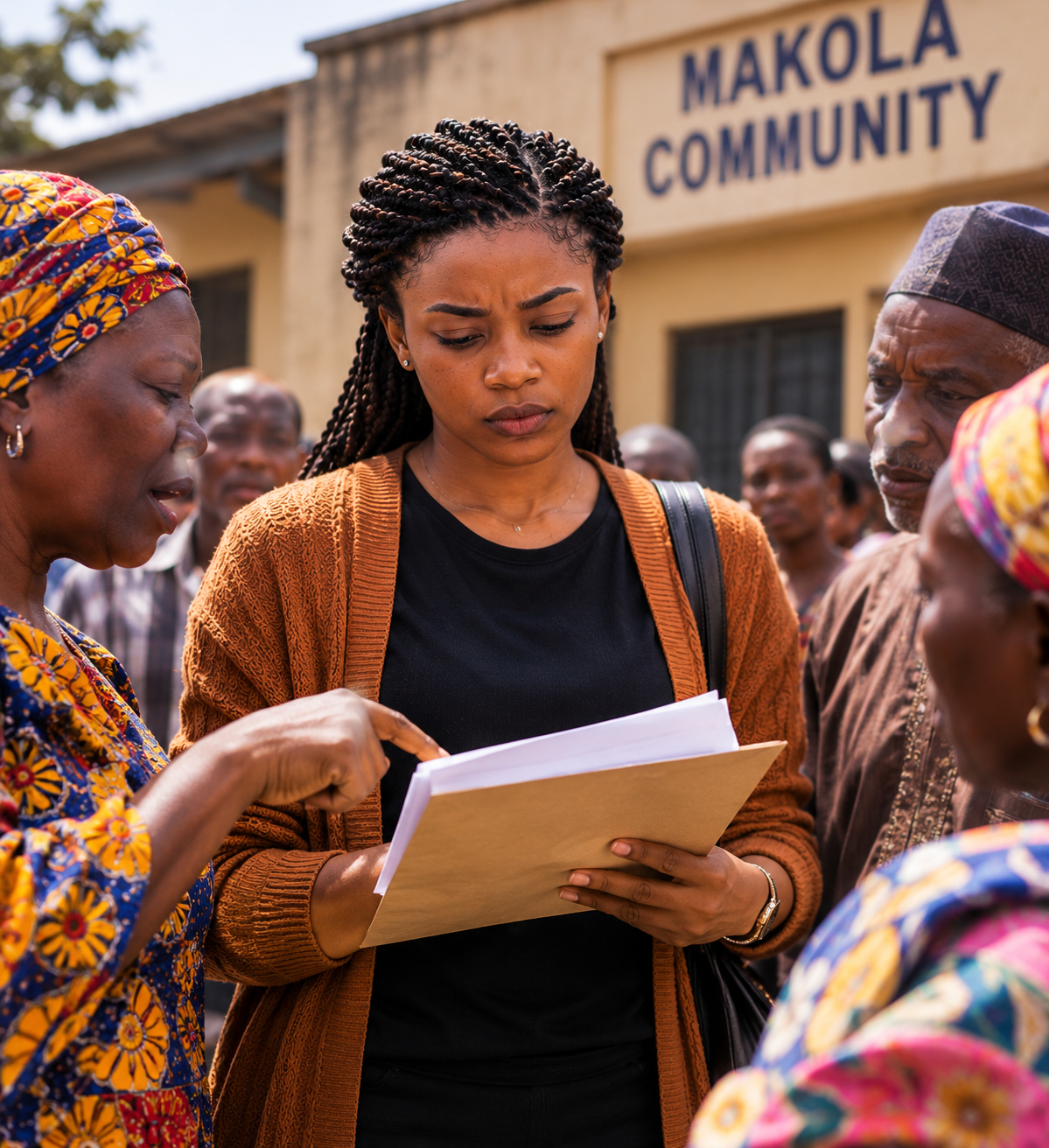
Then something unexpected happened.
A local radio presenter mentioned the school during a morning programme. By midday, people from neighbouring communities were calling in to share similar experiences. One caller said her children’s classroom had broken windows. Another complained that a school library had been announced three years earlier but never completed.
Ama listened to the broadcast in the staff room, her hands trembling slightly.
She had wanted someone to listen. She had not expected so many people to recognise their own stories in hers.
That afternoon, the headteacher called an emergency staff meeting.
“We need to be careful about what we say outside this school,” he warned. “The education office is not pleased with the attention we are receiving.”
One teacher asked whether the repairs would finally begin.
The headteacher adjusted his glasses and looked away.
“No one has given us a date.”
The room fell silent.
For the first time, Ama noticed that the fear in the room was not hers alone. Her colleagues were afraid too. Some feared losing their jobs. Others feared being transferred. A few simply did not believe anything would change.
On Wednesday, a letter arrived from the district education office inviting Ama to a meeting.
She arrived early, carrying the original budget report and photographs of the damaged classroom. Three officials sat across the table from her.
“Why did you take this matter to the parents instead of following the proper channels?” one asked.
Ama took a deep breath.
“I tried to understand what happened. The funds were allocated, but the classroom is still unsafe. I invited the parents to see the situation for themselves.”
Another official leaned forward.
“Are you accusing someone of misusing public funds?”
“No,” Ama replied. “I am asking for an explanation. There is a difference.”
For a moment, nobody spoke.
Outside the building, parents had gathered with handwritten placards. They were not there to attack anyone. They wanted answers, a safe classroom, and a clear date for the repairs.
Among them stood a quiet man named Kofi, a local carpenter whose daughter attended Ama’s class. He had brought something with him: a folder containing photographs of three other schools in the district with similar problems.
“This is bigger than Makola,” he told a journalist. “If we keep quiet, our children will keep paying the price.”
By evening, the story had reached the district’s senior officials. A public statement promised an inspection of the school and a review of the repair allocation.
Some parents celebrated. Others remained sceptical. They had heard promises before.
Ama returned to her classroom and looked at the cracked ceiling. Nothing had changed yet. The water still stained the walls, and the broken section of the roof still needed urgent attention.
But something else had changed.
People were asking questions together.
That night, as Ama prepared her lessons, her phone buzzed with a message from an unknown number:
“You have made your point. Stop now, before you regret it.”
She read it twice.
Then another message arrived. This one was from Kofi.
“The parents are meeting tomorrow. We will not let this disappear.”
Ama placed her phone beside her lesson notes and looked out through the classroom window.
The road outside was quiet, but she knew the town was awake.
The officials were watching. The parents were watching. The teachers were watching one another.
And somewhere, someone was hoping the noise would die down.
But Makola had reached a turning point. The question was no longer whether the truth would be heard.
The question was what would happen now that everyone had heard it.
Reflection Corner
- What can happen when ordinary people speak up together?
- How should leaders respond when citizens demand accountability?
- What responsibility does the media have when reporting allegations of wrongdoing?
Coming Next: Episode 4 — “Change Begins”
An inspection is announced, but when the investigators arrive at Makola, they discover something nobody expected. Will the promised repairs finally